
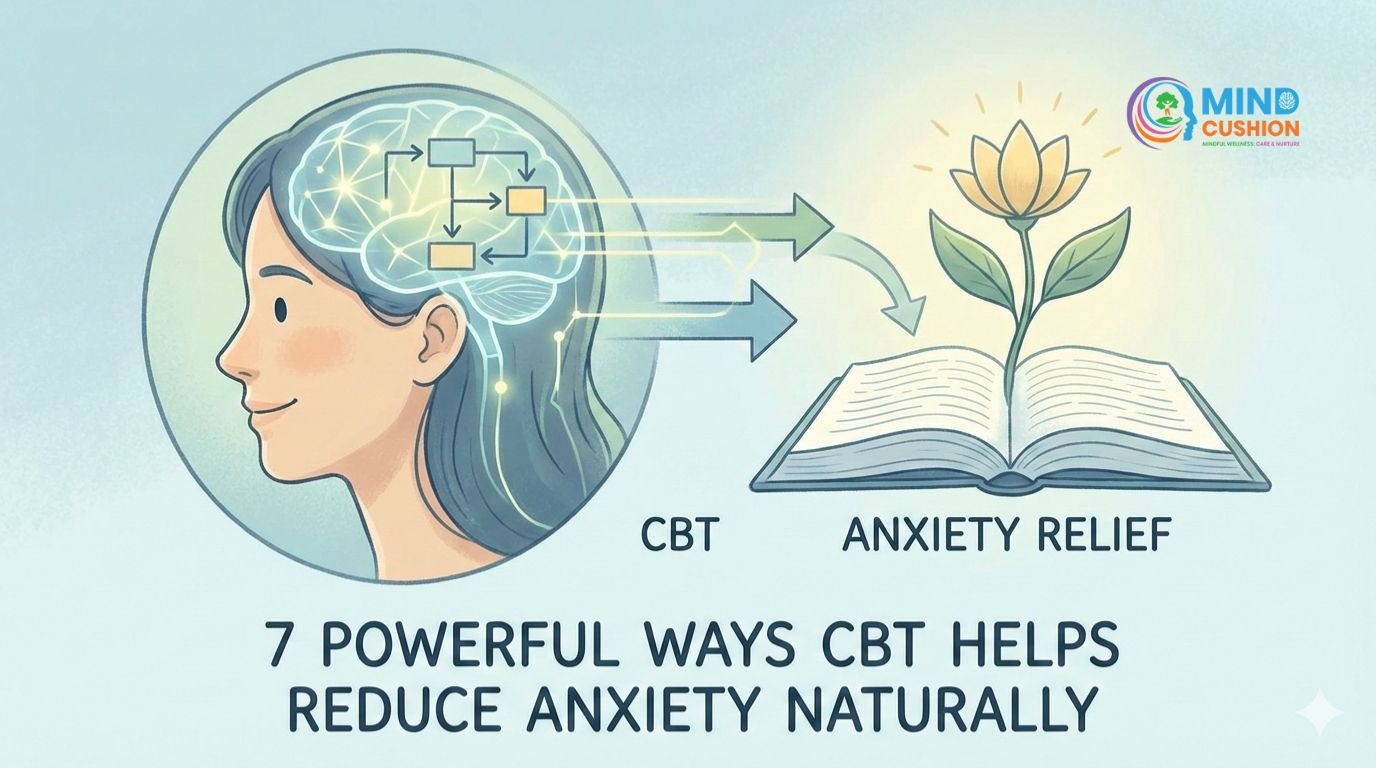
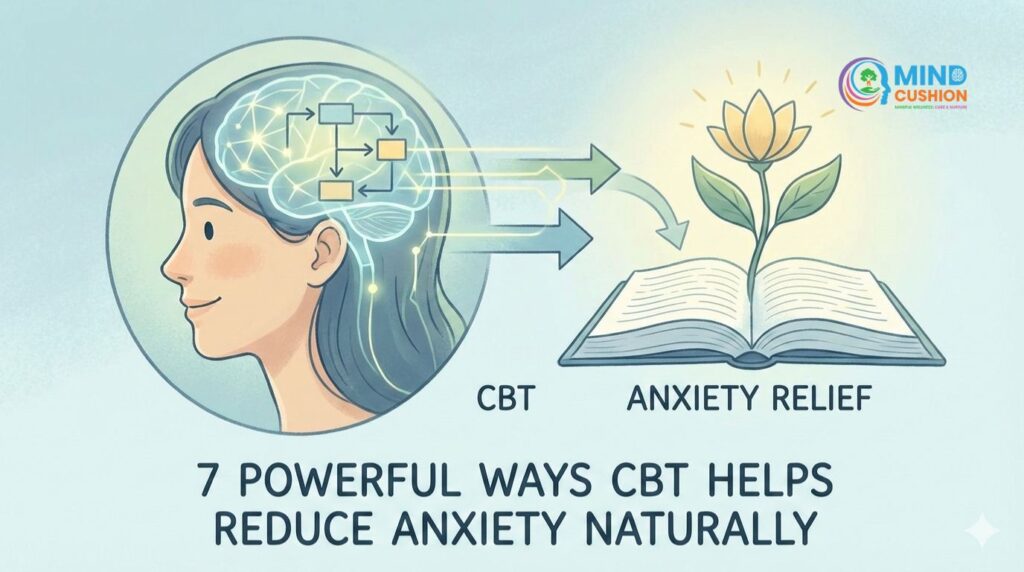
7 Powerful Ways CBT Helps Reduce Anxiety Naturally
Table of Contents
- 🧠 7 Powerful Ways CBT Helps Reduce Anxiety Naturally
- What Is Cognitive Behavioral Therapy (CBT)?
- Understanding Anxiety Through a CBT Lens
- 1. CBT Helps Identify Anxiety Triggers
- 2. CBT Restructures Negative Thinking
- 3. CBT Reduces Avoidance Behaviors
- 4. CBT Teaches Practical Coping Skills
- 5. CBT Improves Emotional Regulation
- 6. CBT Builds Self-Efficacy and Confidence
- 7. CBT Offers Long-Term Anxiety Relief
- Is CBT Right for You?
- Final Thoughts
🧠 7 Powerful Ways CBT Helps Reduce Anxiety Naturally
Anxiety can feel overwhelming, unpredictable, and exhausting. For many people, it affects daily functioning, relationships, sleep, and self-confidence. While anxiety is a natural stress response, chronic anxiety often requires structured psychological support.
One of the most effective and evidence-based approaches is Cognitive Behavioral Therapy (CBT). Understanding how CBT helps in anxiety can empower individuals to take control of their mental health and build long-lasting coping skills.
What Is Cognitive Behavioral Therapy (CBT)?
Cognitive Behavioral Therapy is a structured, goal-oriented psychotherapy that focuses on the connection between thoughts, emotions, and behaviors. CBT operates on a simple yet powerful idea: the way we think influences how we feel and act.
Rather than focusing only on past experiences, CBT emphasizes present patterns and practical strategies to manage emotional challenges like anxiety.
[7 Powerful Ways CBT Helps Reduce Anxiety Naturally]Understanding Anxiety Through a CBT Lens
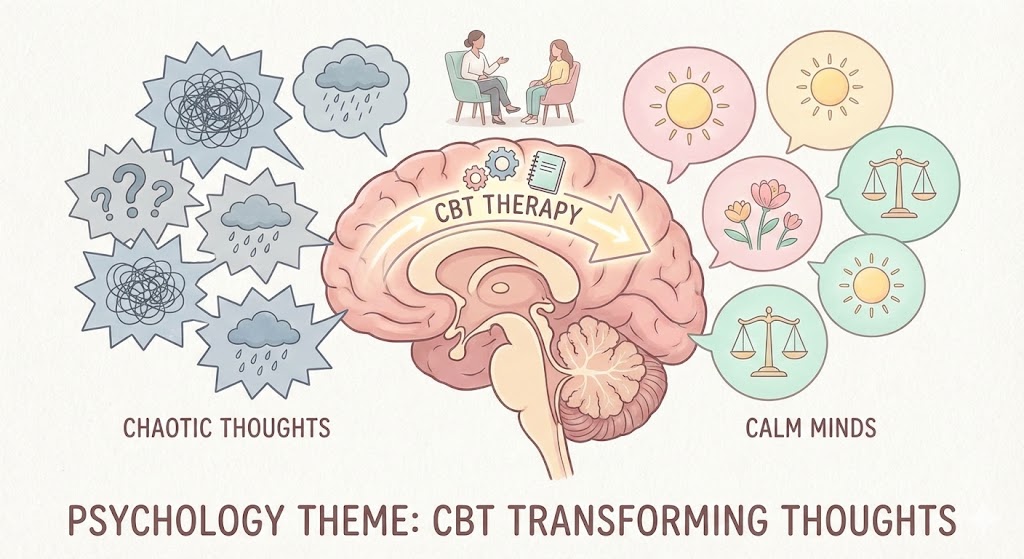
Anxiety often develops due to distorted thinking patterns, avoidance behaviors, and heightened emotional responses.
Common Anxiety Thought Patterns
- Catastrophizing worst-case scenarios
- Overgeneralizing negative experiences
- Excessive worry about the future
- Fear-based assumptions
CBT helps individuals identify and challenge these patterns, replacing them with more balanced and realistic thoughts.
1. CBT Helps Identify Anxiety Triggers
The first step in CBT for anxiety is awareness.
How CBT Supports Trigger Identification
- Recognizing situations that provoke anxiety
- Understanding emotional and physical responses
- Tracking recurring anxious thoughts
This awareness helps individuals respond consciously instead of reacting automatically.
2. CBT Restructures Negative Thinking
A core strength of CBT is cognitive restructuring.
What Cognitive Restructuring Does
- Challenges irrational fears
- Encourages evidence-based thinking
- Reduces self-critical inner dialogue
Instead of thinking “Something bad will happen”, CBT guides the mind toward “I can handle uncertainty even if things don’t go perfectly.”
This shift significantly reduces anxiety intensity over time.
[7 Powerful Ways CBT Helps Reduce Anxiety Naturally]3. CBT Reduces Avoidance Behaviors
Avoidance temporarily reduces anxiety but strengthens it long-term.
CBT gradually encourages individuals to face feared situations safely, helping anxiety lose its power.
Exposure Techniques in CBT
- Gradual exposure
- Behavioral experiments
- Anxiety tolerance building
This process builds confidence and emotional resilience.
4. CBT Teaches Practical Coping Skills
CBT for anxiety equips individuals with lifelong tools.
Common CBT Coping Skills
- Deep breathing techniques
- Grounding exercises
- Thought journaling
- Problem-solving strategies
These skills empower individuals to manage anxiety independently beyond therapy sessions.
5. CBT Improves Emotional Regulation
Anxiety often causes emotional overwhelm.
CBT helps individuals:
- Recognize emotional patterns
- Respond rather than react
- Develop emotional balance
This results in greater emotional stability and self-control.
6. CBT Builds Self-Efficacy and Confidence
As individuals challenge fears and succeed, confidence grows naturally.
CBT reinforces the belief:
“I can manage my anxiety.”
This mindset shift is crucial for long-term recovery.
7. CBT Offers Long-Term Anxiety Relief
Unlike short-term coping methods, CBT focuses on lasting change.
Why CBT Is Effective Long-Term
- Addresses root causes
- Builds independent coping skills
- Reduces relapse risk
Research consistently shows CBT as one of the most effective treatments for anxiety disorders.
[7 Powerful Ways CBT Helps Reduce Anxiety Naturally]Is CBT Right for You?
CBT is beneficial for:
- Generalized Anxiety Disorder (GAD)
- Social anxiety
- Panic disorder
- Health anxiety
- Stress-related anxiety
If anxiety interferes with your daily life, CBT can provide clarity, structure, and emotional relief.
Final Thoughts
Understanding how CBT helps in anxiety disorders reveals why it is widely recommended by mental health professionals worldwide.
CBT doesn’t eliminate anxiety overnight — but it teaches you how to understand, manage, and reduce it sustainably. With the right support, anxiety can become manageable rather than controlling.
At Mind Cushion, we believe emotional wellbeing begins with awareness and compassionate care 🌱